𝗧𝗲𝗲𝗻 𝗧𝘂𝗿𝗻𝘀 𝗗𝗶𝘀𝗰𝗮𝗿𝗱𝗲𝗱 𝗣𝗹𝗮𝘀𝘁𝗶𝗰 𝗕𝗼𝘁𝘁𝗹𝗲𝘀 𝗜𝗻𝘁𝗼 𝗪𝗮𝗿𝗺 𝗦𝗵𝗲𝗹𝘁𝗲𝗿𝘀 𝗳𝗼𝗿 𝗦𝘁𝗿𝗮𝘆 𝗗𝗼𝗴𝘀 𝗶𝗻 𝗦𝗽𝗮𝗶𝗻
Real compassion often begins with a moment that other people barely notice. A cold street, a passing glance, an animal curled up against the night, these are the kinds of scenes many people see and feel sad about for a second before continuing on with their day. But for one teenager in Spain, the sight of stray dogs trying to endure freezing nights did not fade after he walked away. It stayed with him. He kept thinking about the animals left outside with no walls to block the wind, no dry place to sleep, and no reliable protection from dropping temperatures. That quiet concern eventually turned into action, and from that action came an idea both practical and deeply thoughtful.
Instead of accepting the situation as something too big for one person to change, the teenager began looking at what was already around him. He noticed plastic bottles scattered in recycling bins and along the streets, the kind of waste people pass every day without much thought. Where others saw litter and discarded material, he saw potential. If those bottles could be collected and arranged in the right way, maybe they could become something useful. Maybe they could be transformed into shelter. What followed was not an expensive project backed by large funding or professional construction crews. It was a simple but intelligent effort led by one young person who decided that the animals in his neighborhood deserved better than the cold pavement.
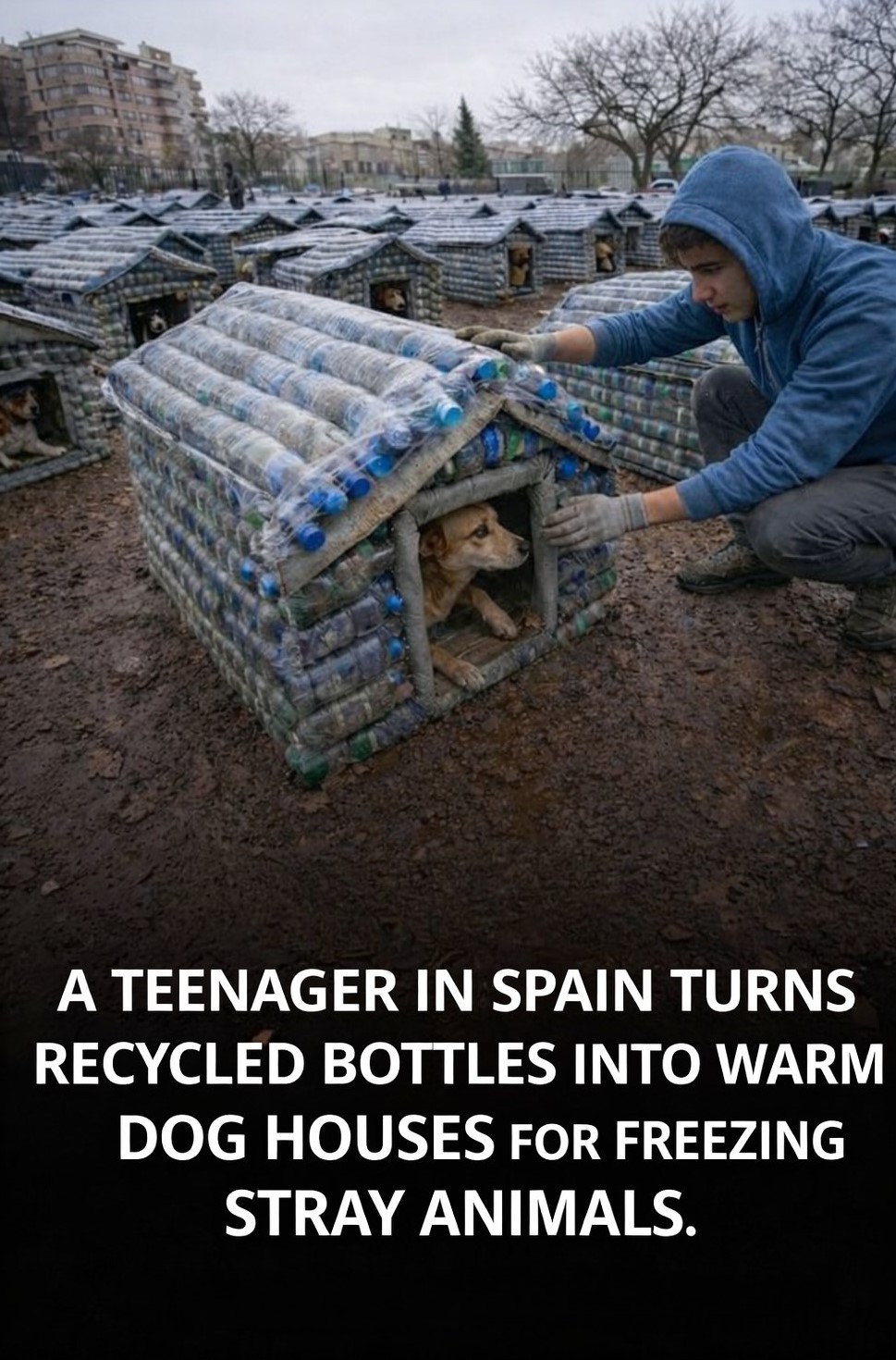
He started gathering used plastic bottles from wherever he could find them. Some came from recycling bins, others from public spaces where they had been thrown away. Then he began experimenting with how to use them. By stacking and compressing the bottles together, he created thick panels that could serve as walls for small dog shelters. The idea was clever for a very specific reason. Plastic bottles trap air, and that air helps create insulation. In freezing conditions, insulation matters enormously. It can make the difference between a space that feels exposed and one that can actually hold warmth through the night. Rather than treating the bottles as trash, he used their shape and structure as part of a solution.
The shelters he built were not crude piles of plastic or temporary heaps meant to last only a day or two. They were designed with purpose. He created small enclosed spaces that could protect stray dogs from the wind and cold while also giving them a dry and slightly elevated place to rest. The floors were raised, which helped keep the dogs off the freezing ground. The roofs were angled, allowing the shelters to shed rain more effectively and making the structures more practical in rough weather. Each detail showed that he was thinking carefully about what an animal outdoors would actually need, not just what looked good from a distance.
That is part of what makes the project so meaningful. It was not only generous, it was thoughtful. The teenager did not simply respond emotionally and stop there. He took the extra step of turning his concern into design, and his design into something functional. Many people care, but fewer are willing to stay with an idea long enough to make it useful. He did. He took a problem that felt visible but ignored and found a way to answer it with the materials most people had already thrown away.
As the work continued, several shelters began appearing throughout the neighborhood. What had once been plastic waste sitting useless on the street now stood in the form of colorful little refuges for animals with nowhere else to go. Each shelter represented two kinds of rescue at once. The first was obvious. Stray dogs now had more protection during cold nights. The second was quieter but just as important. Bottles that would have remained part of the local waste problem were being repurposed into something meaningful. In one small community effort, he found a way to respond to both environmental waste and animal vulnerability at the same time.
The visual contrast alone must have been striking. Instead of seeing scattered bottles and cold corners, people began seeing structures built with care and imagination. The shelters were not grand or complicated, but they carried a message much larger than their size. They showed that useful change does not always require huge budgets, advanced technology, or official authority. Sometimes it begins with one person refusing to dismiss a problem simply because it seems ordinary. Street animals suffering in winter can become part of the background in many places. This teenager chose not to let that happen.
There is also something important about the age of the person behind the project. Teenagers are often seen as too young to make meaningful change on their own, especially when it comes to community problems. Adults may assume good intentions need to wait until someone is older, more experienced, or more connected. This story pushes against that assumption in a powerful way. A young person noticed suffering, thought carefully about how to respond, and created something real. The shelters did not exist because someone handed him a full plan. They existed because he trusted that his idea was worth trying.
That kind of initiative matters because it can influence the people around him in ways that extend beyond the shelters themselves. When a neighborhood sees one teenager turning recycled waste into protection for vulnerable animals, it changes what feels possible. It reminds people that solutions do not always arrive from institutions first. Sometimes they come from individuals who care enough to experiment, build, and keep going. Inspiration often spreads that way, quietly at first. One person acts. Others start paying attention. Then what once seemed unusual begins to feel possible for more people too.
The project also carries a deeper lesson about how compassion works best when paired with observation. The teenager did not help in an abstract way. He paid attention to exactly what the dogs were facing. They were cold. They were exposed. They needed insulation, shelter, and distance from the freezing ground. His solution came directly from understanding the problem. That is why it worked. True kindness is not only about feeling bad for suffering. It is about noticing what is actually needed and responding in a way that meets that need.
In a world where stories of cruelty, neglect, and waste can feel endless, this one stands out for its simplicity and hope. A boy in Spain saw street dogs shivering. He refused to look away. He gathered what other people had discarded and turned it into warmth. He gave vulnerable animals a better chance to make it through the night. At the same time, he showed his community that creativity and care can work together in remarkable ways.
What makes the story linger is not just the shelters themselves, but the spirit behind them. This was not about recognition, money, or praise. It was about refusing to let helpless animals face winter with nothing at all. It was about seeing value where others saw waste. It was about understanding that compassion becomes most powerful when it is turned into action.
Those small shelters now stand as proof that real change can begin with something as simple as paying attention, feeling responsible, and deciding to do what you can with what you have. For the stray dogs protected inside them, that choice means warmth. For everyone else, it is a reminder that kindness, when combined with imagination, can reshape more than one life at a time.