If You Drool While Sleeping Often, Check for These 6 Diseases
When Nighttime Drooling Is More Than Just a Messy Pillow — It Could Be Your Body Sending a Signal
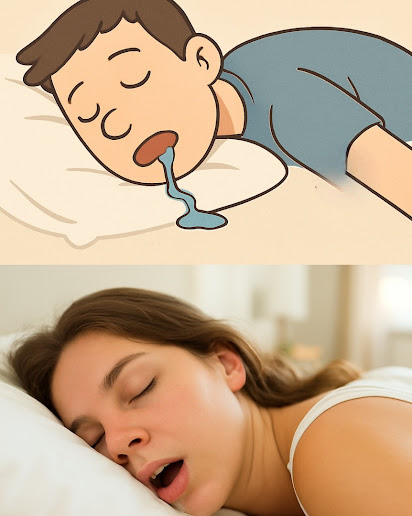
The problem of drooling while sleeping should not be ignored, as it may be a sign of underlying health conditions.
Take Xiao Liang, a 25-year-old programmer from China. Due to heavy workloads, he often worked late into the night, then stayed up even later playing games to unwind. Exhausted, he’d finally crash—only to wake up with a damp pillow and an embarrassed feeling.
When Xiao Liang finally visited a doctor about his persistent drooling, the physician noticed something important: Xiao Liang always drooled on the same side. This detail prompted a brain CT scan. The results revealed early signs of cerebral blood vessel blockage—a warning that could have led to stroke if left undetected.
Thanks to early intervention, Xiao Liang avoided serious complications. His story is a powerful reminder: nighttime drooling isn’t always harmless.
💧 Where Does Saliva Come From?
Understanding drooling starts with understanding saliva itself.
The Salivary System
|
Component
|
Function
|
|---|---|
|
Parotid glands (near ears)
|
Produce watery saliva rich in enzymes
|
|
Submandibular glands (under jaw)
|
Produce mixed saliva (watery + mucus)
|
|
Sublingual glands (under tongue)
|
Produce thicker, mucus-rich saliva
|
|
Minor salivary glands (throughout mouth)
|
Keep oral mucosa moist
|
Key Facts About Saliva
- Healthy adults produce 1–1.5 liters per day (~30 ml/hour)
- Saliva is controlled by the autonomic nervous system—it’s involuntary, like your heartbeat
- Functions include: → Moistening the mouth → Aiding digestion (amylase breaks down starch) → Protecting teeth (neutralizes acids, fights bacteria) → Supporting speech and swallowing
💡 Why we drool: During sleep, swallowing reflexes slow down. If saliva production increases or mouth closure weakens, drooling occurs.
😴 Common, Non-Concerning Causes of Sleep Drooling
Before worrying about disease, consider these benign factors:
|
Cause
|
Why It Happens
|
Solution
|
|---|---|---|
|
Sleeping position
|
Side/stomach sleeping lets gravity pull saliva out
|
Try back-sleeping; use supportive pillows
|
|
Nasal congestion
|
Colds, allergies, or deviated septum force mouth breathing
|
Treat congestion; consider saline rinses
|
|
Medications
|
Some drugs (antidepressants, antipsychotics) increase saliva
|
Discuss alternatives with your doctor
|
|
Stress/fatigue
|
Exhaustion relaxes facial muscles; stress affects nervous system
|
Prioritize sleep hygiene; manage stress
|
|
Teething (children)
|
Normal developmental stage
|
Use bibs; most outgrow it by age 4
|
|
Pregnancy
|
Hormonal changes increase saliva production
|
Usually resolves postpartum
|
✅ Reassurance: Occasional drooling is normal. Concern arises with sudden, frequent, or one-sided drooling in adults.
🚨 6 Diseases Linked to Frequent Sleep Drooling
If drooling is new, persistent, or accompanied by other symptoms, consider these conditions:
1. Oral Diseases
Conditions: Gingivitis, periodontitis, pharyngitis, dental infections, ill-fitting dentures
Why it causes drooling: Inflammation stimulates salivary glands; pain may disrupt normal swallowing
Other symptoms:
→ Bad breath, bleeding gums, tooth pain
→ Swollen cheeks or jaw
→ Difficulty chewing
Why it causes drooling: Inflammation stimulates salivary glands; pain may disrupt normal swallowing
Other symptoms:
→ Bad breath, bleeding gums, tooth pain
→ Swollen cheeks or jaw
→ Difficulty chewing
Action: See a dentist for evaluation and treatment.
2. Facial Nerve Disorders (e.g., Bell’s Palsy)
What it is: Temporary paralysis or weakness of facial muscles on one side
Why it causes drooling: Weak muscles can’t seal the lips or control saliva on the affected side
Other symptoms:
→ Drooping of one side of the face
→ Difficulty closing one eye
→ Loss of forehead wrinkles on one side
→ Altered taste
Why it causes drooling: Weak muscles can’t seal the lips or control saliva on the affected side
Other symptoms:
→ Drooping of one side of the face
→ Difficulty closing one eye
→ Loss of forehead wrinkles on one side
→ Altered taste
Action: Seek medical care immediately—early treatment improves recovery.
3. Gastroesophageal Reflux Disease (GERD)
What it is: Stomach acid flows back into the esophagus
Why it causes drooling: Acid irritation triggers excess saliva production (a protective reflex called “water brash”)
Other symptoms:
→ Heartburn, especially after meals or when lying down
→ Sour taste in mouth upon waking
→ Chronic cough or hoarseness
→ Chest discomfort
Why it causes drooling: Acid irritation triggers excess saliva production (a protective reflex called “water brash”)
Other symptoms:
→ Heartburn, especially after meals or when lying down
→ Sour taste in mouth upon waking
→ Chronic cough or hoarseness
→ Chest discomfort
Action: Consult a gastroenterologist; lifestyle changes + medication often help.
4. Neurological Conditions (Parkinson’s Disease, Stroke)
What it is: Disorders affecting brain control of muscles and reflexes
Why it causes drooling: Impaired swallowing reflex (dysphagia) + reduced facial muscle control
Other symptoms:
→ Tremors, stiffness, slow movement (Parkinson’s)
→ Sudden weakness, slurred speech, confusion (stroke)
→ Difficulty managing saliva even while awake
Why it causes drooling: Impaired swallowing reflex (dysphagia) + reduced facial muscle control
Other symptoms:
→ Tremors, stiffness, slow movement (Parkinson’s)
→ Sudden weakness, slurred speech, confusion (stroke)
→ Difficulty managing saliva even while awake
Action: Stroke symptoms require emergency care. For progressive symptoms, see a neurologist.
⚠️ Critical: Xiao Liang’s case highlights that cerebrovascular issues can present subtly. One-sided drooling + headache/dizziness warrants urgent evaluation.
5. Sleep Apnea
What it is: Repeated breathing interruptions during sleep
Why it causes drooling: Mouth breathing to compensate for blocked airways + relaxed throat muscles
Other symptoms:
→ Loud snoring, gasping during sleep
→ Daytime fatigue despite “enough” sleep
→ Morning headaches
→ Difficulty concentrating
Why it causes drooling: Mouth breathing to compensate for blocked airways + relaxed throat muscles
Other symptoms:
→ Loud snoring, gasping during sleep
→ Daytime fatigue despite “enough” sleep
→ Morning headaches
→ Difficulty concentrating
Action: A sleep study can diagnose apnea; treatment (CPAP, oral devices) often reduces drooling.
6. Infections (Tonsillitis, Mononucleosis, Sinusitis)
What it is: Viral or bacterial infections affecting the throat, tonsils, or sinuses
Why it causes drooling: Swelling/pain makes swallowing difficult; congestion forces mouth breathing
Other symptoms:
→ Sore throat, fever, swollen lymph nodes
→ Nasal discharge, facial pressure
→ Fatigue, body aches
Why it causes drooling: Swelling/pain makes swallowing difficult; congestion forces mouth breathing
Other symptoms:
→ Sore throat, fever, swollen lymph nodes
→ Nasal discharge, facial pressure
→ Fatigue, body aches
Action: See a doctor for diagnosis; antibiotics (if bacterial) or supportive care usually resolves symptoms.
🩺 When to See a Doctor: Red Flags
Consult a healthcare provider if drooling is accompanied by:
✅ One-sided drooling (always the same side)
✅ Sudden onset in adulthood with no clear cause
✅ Neurological symptoms: facial weakness, slurred speech, confusion, vision changes
✅ Swallowing difficulties even when awake
✅ Persistent symptoms lasting >2 weeks despite lifestyle changes
✅ Unexplained weight loss or fatigue
✅ Sudden onset in adulthood with no clear cause
✅ Neurological symptoms: facial weakness, slurred speech, confusion, vision changes
✅ Swallowing difficulties even when awake
✅ Persistent symptoms lasting >2 weeks despite lifestyle changes
✅ Unexplained weight loss or fatigue
🚑 Emergency signs: Sudden facial drooping, arm weakness, speech difficulty = call emergency services immediately (possible stroke).
🛡️ Prevention & Management Tips
Lifestyle Adjustments
|
Strategy
|
How It Helps
|
|---|---|
|
Sleep on your back
|
Reduces gravity-driven drooling
|
|
Treat nasal congestion
|
Promotes nose breathing; keeps lips closed
|
|
Stay hydrated
|
Thickens saliva slightly, making it easier to manage
|
|
Practice good oral hygiene
|
Reduces infections that stimulate saliva
|
|
Manage stress
|
Lowers nervous system overactivity
|
|
Avoid alcohol before bed
|
Relaxes throat muscles excessively
|
Practical Solutions
- Use a wedge pillow to elevate head slightly
- Try mouth tape (designed for sleep) only if you can breathe comfortably through your nose
- Keep a soft towel by your pillow for easy cleanup
- Apply a barrier cream (like petroleum jelly) to prevent skin irritation
❓ FAQs: Your Questions, Answered
Q: Is drooling during sleep ever normal for adults?
A: Yes—occasional drooling due to sleep position, congestion, or fatigue is common. Concern arises with new, frequent, or one-sided drooling.
A: Yes—occasional drooling due to sleep position, congestion, or fatigue is common. Concern arises with new, frequent, or one-sided drooling.
Q: Can anxiety cause nighttime drooling?
A: Indirectly. Anxiety can cause mouth breathing, teeth grinding, or disrupted sleep—all of which may contribute.
A: Indirectly. Anxiety can cause mouth breathing, teeth grinding, or disrupted sleep—all of which may contribute.
Q: Does drooling mean I have Parkinson’s?
A: No. Drooling alone is rarely diagnostic. Parkinson’s involves multiple progressive symptoms (tremor, stiffness, balance issues).
A: No. Drooling alone is rarely diagnostic. Parkinson’s involves multiple progressive symptoms (tremor, stiffness, balance issues).
Q: Can I stop drooling by training myself to swallow in my sleep?
A: Not consciously—but treating underlying causes (like sleep apnea or reflux) often resolves it.
A: Not consciously—but treating underlying causes (like sleep apnea or reflux) often resolves it.
Q: Should I wake up to swallow if I notice drooling?
A: No—disrupting sleep worsens fatigue. Focus on addressing root causes instead.
A: No—disrupting sleep worsens fatigue. Focus on addressing root causes instead.
Q: Is drooling a sign of dementia?
A: In advanced stages, yes—due to loss of swallowing control. But isolated drooling in younger adults is unlikely related.
A: In advanced stages, yes—due to loss of swallowing control. But isolated drooling in younger adults is unlikely related.
💬 Final Thought: Listen to the Whispers
Your body speaks in subtle languages. A damp pillow isn’t just laundry—it might be a message.
Xiao Liang’s story reminds us: what seems like a minor annoyance can be an early warning. Not every drool signals disease, but awareness is your first line of defense.
So tonight, as you settle into sleep, honor your body’s wisdom. Notice patterns. Ask questions. And if something feels off, trust yourself enough to seek answers.
“Health isn’t found in grand gestures. It’s found in the quiet moments when we choose to listen.”
Have you experienced unexplained drooling? Did you find a cause? Share your story below—we’re all learning to care for ourselves, together. 💙
Disclaimer: This article is for educational purposes only and does not constitute medical advice, diagnosis, or treatment. Always consult a qualified healthcare professional for personal health concerns. If you experience sudden neurological symptoms, seek emergency care immediately