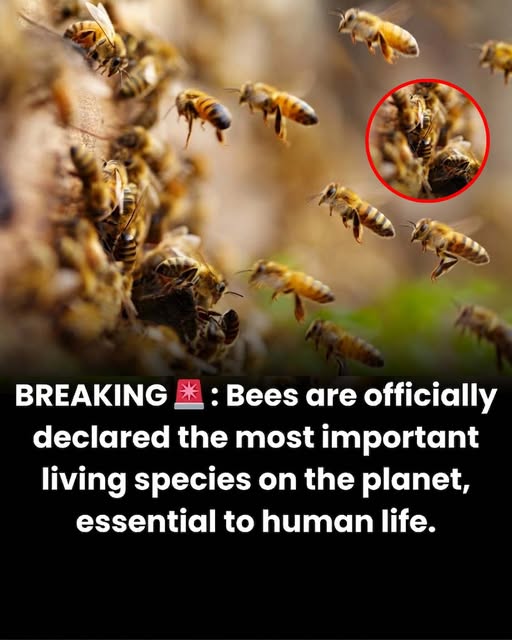
Bees may be small, but their impact on our world is enormous.
Their true power lies in pollination. As bees move from one flower to another, they carry pollen that allows plants to reproduce. This simple process supports nearly 75% of the world’s food crops. Fruits, vegetables, nuts, and even the plants used to feed livestock all depend—at least in part—on pollinators like bees.
Without them, the consequences would be far-reaching. It’s not just honey that would disappear. Crop production would decline, food variety would shrink, and ecosystems would begin to weaken. Many wild plants rely on bee pollination as well, meaning their loss would affect forests, grasslands, and the animals that depend on those environments.
Unfortunately, bee populations are already in decline. Factors such as pesticide use, habitat destruction, climate change, and disease are all contributing to this crisis. In some areas, entire colonies vanish in what scientists call colony collapse disorder.
What makes bees so vital isn’t their size—it’s their role. They quietly sustain the systems that feed and support billions of living beings.
Protecting bees isn’t just about saving an insect. It’s about preserving the balance of life on Earth.